
The Perfect Pesach Plan


airplane

Ask women what is the most stressful time of year and many will tell you “Erev Pesach.” We all have our methods of madness that determine how we handle the situation. There are those who start months in advance and those who wait for the last minute. Some women work randomly, while others work by their carefully plotted schedules and lists. I am one of the latter. I really don’t do well with the carefree, relaxed approach to making Pesach. I’m definitely not a last-minute person and like to feel in control of the situation. Well, as my grandmother used to say, “Man plans, and G-d laughs.” (It sounds better in Yiddish.)

Nissan, 2008. I had diligently worked my way through all the cleaning, culminating in an intense motza’ei Shabbos and Sunday of The Kitchen. Sunday night, we finally finished. What a good feeling! The kitchen was all cleaned, scrubbed, and scoured; ready for the massive line-the-counters/cabinets/etc. project, which would commence the following morning. We settled down for a night of well deserved sleep. Four a.m., the phone rang. It was my husband’s little sister informing us that their mother had passed away. 


Read More:The Perfect Pesach Plan

Hats Off to… A Financial Analysis of the Borsalino Boycott


hats

We all had our fill of hamantaschen recently, so I thought we should pause and, in proper post-Purim spirit, focus on Mordechai-taschen. “What’s that!” you ask? Why, Mordechai’s version of a hat, of course. You see, the origin of our favorite three-cornered baked treats, it is said, was the triangular shape of the evil Haman’s hat. But have we ever considered what Mordechai’s hat looked like? Folks I think it must have been a Borsalino. What else?

I embarked on this quest for Mordechai’s head covering due to a recent item in the frum media, which reported on a Borsalino boycott. It apparently started with a group of Chabad yeshiva bachurim who were angry at the price spike on this frum essential to an unacceptable $300 and decided to take action. This unprecedented tactic has since spread to other circles.


Read More:Hats Off to… A Financial Analysis of the Borsalino Boycott

Shalom Bayis


crying child

Dear Dr. Weisbord,

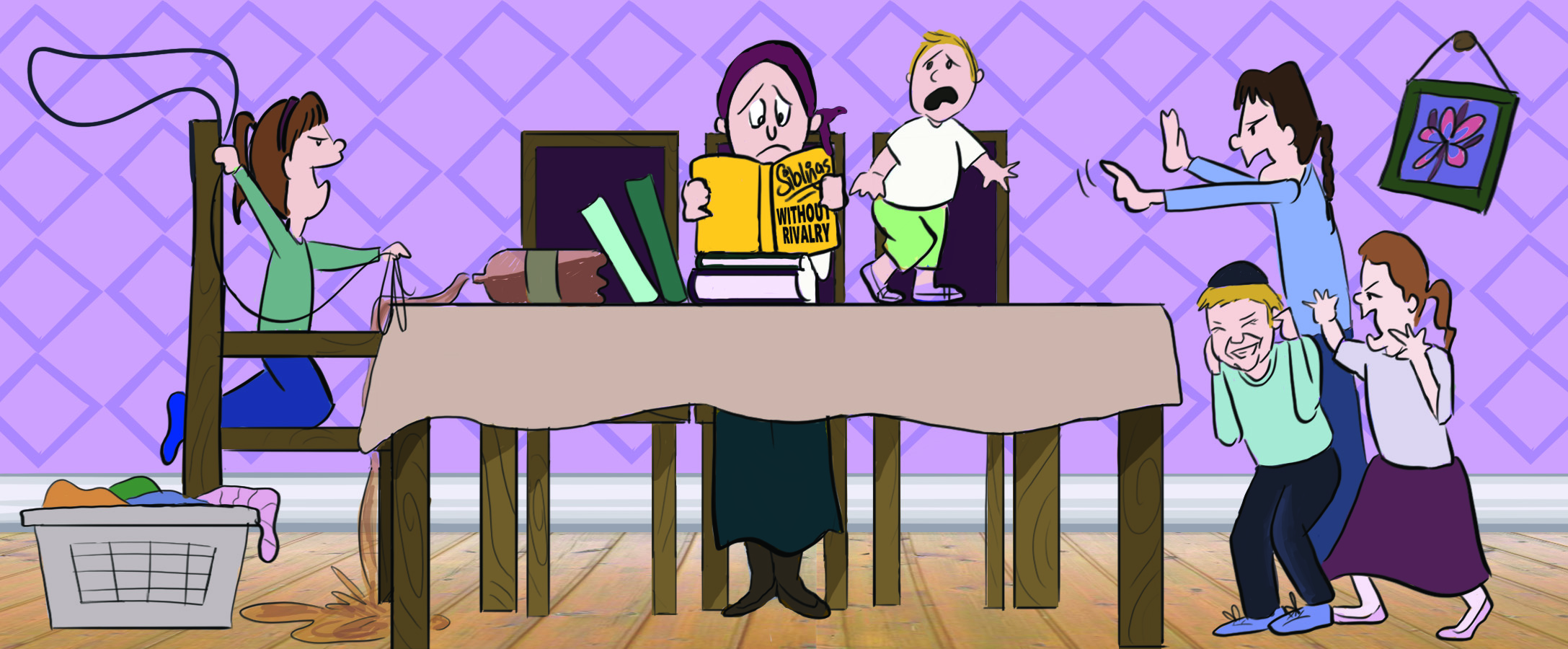
Our youngest son is in elementary school and not doing well. He has a slight learning disability and is perhaps a little awkward. He is teased by the other children, to the point that he doesn’t want to go to school. We have a huge fight every morning to get him out the door, with lots of yelling and tears. He also refuses to go to shul on Shabbos, because the same kids torment him there.

The school is giving us a hard time. They are very critical, and make me feel inadequate as a parent. Their latest suggestion is to sign him up for a social skills class.


Read More:Shalom Bayis

Carrots: Pesach Staple and Nutritional Powerhouse


carrots

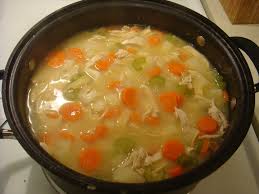
In contrast to current Pesach food trends that tend to emphasize the fancy, the gourmet, the complicated, and the expensive, I’d like to celebrate simplicity and focus on an inexpensive, everyday staple: carrots. Carrots can be used to make simple and delicious dishes that are often just as tasty and palate-pleasing as their more sophisticated counterparts.

The late Rabbi Gil Marks, a”h, in his Encyclopedia of Jewish Food, informs us that the carrot first appeared in Jewish sources in the writings of medieval Persian rabbis. When the carrot was first introduced in Europe, this “lowly” root vegetable was high-class. It was considered a rarity and luxury item. But because carrots thrive in poor soil and can be left in the ground or in a root cellar through the winter, they were cultivated widely by the 15th century and became a significant food throughout the continent. Rabbi Marks writes, “At this time, the carrot emerged as one of the foremost vegetables in the cookery of Central European Jews, a position it would shortly achieve in Eastern Europe as well.”


Read More:Carrots: Pesach Staple and Nutritional Powerhouse

Scouting Around Baltimore


boy scouts

Dovid Cynamon is not your run-of-the-mill kollel fellow. The Pittsburgh native joined Boy Scouts when he was 11 years old, and has been juggling his kollel studies at Ner Israel with his passion for Scouting since June 2011. He founded and currently leads Boy Scout Troop 611 for middle and high schoolers and Cub Scout Pack 611 for elementary school boys, both of which meet on Yeshiva Lane. These Scout units are chartered by Shearith Israel Congregation; Rabbi Hopfer, along with two shul board members, approve all activities and adult volunteers. Current Scout members are students at Talmudical Academy and Torah Institute.

 “I had so much fun and grew so much that I stayed involved with Boy Scouts and Sea Scouts through twelfth grade,” notes Dovid, who mentions that Ner Tamid also has a Boy Scout troop and a Cub Scout pack.


Read More:Scouting Around Baltimore

Musings of a Ba’al Koreh on Purim


clown

 Unlike other Yomim Tovim, we choose how to spend Purim, more or less.  There is only so much variety in how a traditional Jew can observe Pesach or Sukkos, Rosh Hashana or Yom Kippur.  Purim, however, has that odd combination of no איסור מלאכה, and a healthy--but not overwhelming--number of מצוות that, in practice, hardly take a full day to observe.  That means there is a lot of time to do other stuff.
    Many people work on Purim, out of necessity or otherwise.  Some spend the day distributing funds to the poor.  Most are busy delivering משלוח מנות or engaged in other forms of revelry, sober or otherwise.  And many are preparing lavish feasts, watching the children, and taking older boys to visit their rebbe. 
    I spend the day reading the megillah.


Read More:Musings of a Ba’al Koreh on Purim

Queen Begs…and Bam! (Or Vashti’s Lament)


I will not come before the king

I will not come for anything!

Would you, could you in a coach?

His majesty you must approach.

crown


Read More:Queen Begs…and Bam! (Or Vashti’s Lament)

Income Taxes 2015


dollars

In my last article I discussed some last-minute tax law changes that were expected. They indeed came through in December, and they are not earth-shattering. Teachers can deduct $250 in expenses, and college tuition gets a $4,000 deduction or a tax credit, whichever you prefer. And mortgage insurance premiums are now deductible.

Another mortgage-related change is a big deal. It is called “exclusion from income for discharge of mortgage debt,” and here is what it means: Say you are underwater in your mortgage, owing the bank more than what your residence is worth. The mortgage company might “write off ” some of the debt, and you now officially owe less principal. Normally, if someone forgives debt that you owe him, you have to claim the forgiven amount as income. This included home mortgages that were renegotiated, which could become a disaster. This new provision saves people who are in that situation.


Read More:Income Taxes 2015

UJA-President, Alisa Doctoroff Radical Support of Palestinian Non-Violent Activism, And New Israel Fund


checkpoints

Expose Uncovers Extreme Anti-Israel Financial Support From UJA President -Alisa Robbins Doctoroff, President of the UJA-Federation of New York, the largest local philanthropy in the world claims to lead an organization whose mission is to “care for people in need, inspire a passion for Jewish life and learning, and strengthen Jewish communities in New York, in Israel, and around the world.” She was appointed to this position on July 1, 2013 – and until today no one has researched her background.  Unfortunately for her, that time is over.


Read More:UJA-President, Alisa Doctoroff Radical Support of Palestinian Non-Violent Activism, And New Israel Fund

Israel in the Crosshairs The Current Threat and its Possible Outcome


israeli flag

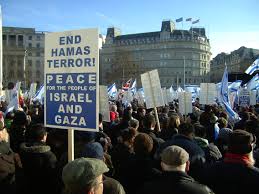
A curious headline appeared online last summer: “Turkey Captures Bird, Accuses It of Spying for Israel.” (The Blaze, July 28, 2013) This headline was not a joke. Rather, it is but one of many bizarre accusations that are daily fare in many parts of the world, and reflect the only-too-real perceptions of its peoples. Nor is it merely a war of words. The headlines are accompanied by increasingly frequent violence against Israel and Jews in general.

As Purim approaches, the Jewish people once again finds itself in the crosshairs of its enemies. Purim also reminds us that attacks on Jews and Israel are nothing new. But, as if to counter the frightening reality of being surrounded by enemies, the Megillah’s hope-inspiring subtext also reveals that those who attempt to destroy the People of Israel are the ones who in the end disappear.


Read More:Israel in the Crosshairs The Current Threat and its Possible Outcome