
Ask the Shadchan


jewish dating

To the Shadchan:

I’m almost 20, and my father says that “we” aren’t ready to start dating. What might be more accurate is that he is not ready for me to start dating, because he is scarred from his involvement in my sister’s dating experience. My father watched, feeling both hopeless and helpless, as my older sister entered an unhealthy marriage. Her marriage ended in divorce, but baruch Hashem, a few years later, my sister is happily married and flourishing in her beautiful new marriage! My sister has already replaced hard times with stunning memories and a bright future, but my father has not been able to do the same.


Read More:Ask the Shadchan

Two to the Galil


bike

Yerushalayim is really a small town, and life brings people from disparate backgrounds together. Such was the case when I met Yehoshua, a chareidi scribe (sofer stam), a few years ago. He invited me for a Shabbos a number of weeks ago, where I got to know his family a little better, including his eight children.

Three things struck my attention. The first was the poverty. The family couldn’t afford meat for their Shabbos lunch meal. The main course was vegetarian cholent and chopped eggs with onions. The second thing I noticed was how well the kids bonded and took care of one another; they seemed pretty happy. The third thing I perceived was that one of the kids, Shloimie, had rotted teeth. You couldn’t help noticing it because he had such a beautiful smile and the face of a bright and sensitive child, and the decaying teeth marred it.


Read More:Two to the Galil

Shalom Bayis


child

Dear Dr. Weisbord,

I have a 14-year-old daughter, the oldest of many children. We have a relatively peaceful house – at least we did until she started acting up. Getting her up every morning is a screaming battle. She sleeps late and misses her ride, then demands that I take her to school. We have brought up our children to help for Shabbos. Everyone pitches in to get ready. But this teenager finds a way to get out of helping. Usually, she claims a stomachache. She manages to avoid whatever I ask her to do. She also can’t be bothered with her family in other ways. She has friends in school and talks to them at night and gets together with them. But she rolls her eyes at any suggestion or activity that we do as a family.


Read More:Shalom Bayis

Journey to the Old City: The Aliyah of Rabbi and Mrs. Motti Berger


old city

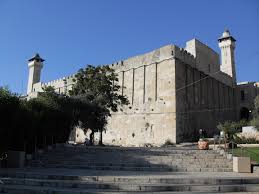
A magnet for spiritual seekers and tourists from all walks of life, Yerushalayim’s Old City is filled with visitors exploring ancient ruins, shopping for souvenirs, and meandering along its alleyways. I, too, stride the age-polished cobblestone paths on this quiet winter morning, in awe of this Golden City of Old, the heartbeat of our Nation, the Holy City that manifests majesty and glory.  I contemplate, as well, the contrast between this morning’s peaceful quiet and the ancient history of contention and bloodshed that these very streets have witnessed. Focusing on my destination, I wonder about the Jewish Quarter’s few thousand Jewish inhabitants. What’s it like to spend one’s days so close to the makom hamikdash?  To have the ability to walk down to the Kotel in a matter of minutes? To encounter strangers from all over the world mere steps from one’s doorway? 


Read More:Journey to the Old City: The Aliyah of Rabbi and Mrs. Motti Berger

To Be a Guest…To Be a Host


set table

It’s a bright November day, and the radio keeps me company as I drive around doing errands. I listen to the excited conversations about preparing for the holiday: how to bake the turkey, when to take it out of the oven, what side dishes to make, when to make them, how many people are coming, and more. Recipes and menus are discussed; questions are asked and answered. Worried cooks are reassured that their turkey will be just perfect. And all this is for just one meal, once a year!

How different it is for religious Jewish families, who prepare a Thanksgiving-like feast every week! Two-, three-, and four-course meals are set out for our families. And then there are the guests. The concept of inviting acquaintances and even strangers for a Shabbos meal is unique to our community. It is not uncommon to meet a stranger at a party, a shiur, or the supermarket and invite them to your house for a Shabbos meal and/or to sleep over.


Read More:To Be a Guest…To Be a Host

Your Car Insurance: An Un-Boring Analysis


car insurance

Rabbi Berel Wein tells a humorous story about the time his plane ticket was cancelled due to a mix-up. Twenty minutes before take-off, the airline quickly seated him in first class, next to the vice-president of TWA. The vice-president noticed him reading the Chumash in Hebrew. After a few moments, he leaned over and asked, “What language is that book written in?” 

“Hebrew,” Rabbi Wein replied, sweetly. “You mean there are still people left in the world who read and write Hebrew?” he responded incredulously. “I thought it was a dead language.” "Well,” Rabbi Wein explained, “there are millions of people in the world who read, write, and speak Hebrew. In fact, your airline flies regularly to a country where Hebrew is the official language, spoken by millions of people.”For some reason the VP disliked the response. “I see that you and I have nothing in common,” he muttered, turning away.


Read More:Your Car Insurance: An Un-Boring Analysis

Park Bench Therapy


kids

It’s been eight days since I returned from visiting my son Shimon and his family in Kiryat Sefer, and I still find myself looking at my watch between 9 and 11 a.m. – that is, 4 p.m. and 6 p.m., Israel time. That’s the time my daughter-in-law Tziporah and her friends meet for “bench therapy.”

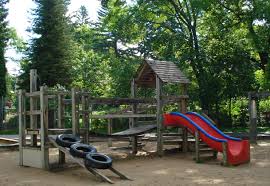
Right in front of my children’s apartment building, there is a large sandy playground that young mothers and their children flock to daily from far and near. Although there are playgrounds every fourth or fifth building, this one is among the most popular.


Read More:Park Bench Therapy

At the Forefront of the Fight against BDS: Eleven Questions for Prof. William A. Jacobson


boycots

Many of you might be familiar with the BDS (Boycott, Divest and Sanctions) movement against Israel and how it has begun to gain a foothold in the United States, particularly in academia. Ironically, BDS violates the very core of academic freedom by prohibiting free speech and equality. BDS singles out Israel – and Israel only – for universal censure. The pages of this magazine have begun to detail the rise of this movement, which is just another veiled anti-Semitic attack on Israel and the Jews. It is imperative for us all to get involved.

I had the pleasure of interviewing Professor William A. Jacobson recently. Jacobson is Associate Clinical Professor of Law and Director of the Securities Law Clinic at Cornell Law School, and publisher of the highly-regarded blogs “Legal Insurrection” and “College Insurrection.” Jacobson has become well-known in helping to lead the fight against this malicious anti-Semitism.


Read More:At the Forefront of the Fight against BDS: Eleven Questions for Prof. William A. Jacobson

Winter Friday Night Menu


shabbos table

Shabbos descends with alarming (and thrilling) speed in the winter. With candle-lighting as early as 4:30 p.m., not only do you need delicious food that will keep your children full and warm through bedtime, but the meal also needs to be cooked in advance, or require very little prep time, so as to insure that the cook can welcome Shabbos in a calm, happy, and mindful state.

Winter Shabbos meals practically demand the right soup, and below is a recipe for a heart-warming chicken soup that will get your meal started off right. Chicken soup is delicious, has been proven to fight the common cold (when the broth is made from the bones), and is the only soup one of my children will eat. This soup can be made in advance and frozen, or put up on Thursday night. (If you decide to freeze it in advance, remove the vegetables and freeze them separately.)


Read More:Winter Friday Night Menu

Moving or Improving


builders

Your house is too small for your growing family but you like your neighborhood. It is close to your shul, your children’s school and your friends. Should you move or improve? Either scenario involves a lot of planning and decision making — from drawing up plans with an architect, choosing a contractor, and getting permits if you are remodeling; to choosing a neighborhood, and finding a real estate agent if you are moving. There are many decisions that need to be made, and with them comes the potential for many difficulties.

One of the main ways to avoid aggravation is to hire people that you trust. There are so many tradespeople to choose from. How can a consumer know who is responsible, honest, and capable?


Read More:Moving or Improving