
Hong Kong Adventure


hong kong

I am a travel buff. It is my goal to visit every state in the United States (I’ve done 33, so far) and many countries throughout the world. There are a lot of countries out there. Some, like Australia and South Africa, are at the top of my list. Some, like Myanmar and Sierra Leone, don’t sound all that appealing. Some, like Iran and Yemen, might be interesting but are off the table for obvious reasons. Antarctica would be amazing, but it’s not actually a country.

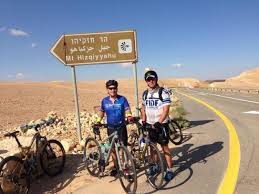
So, when it was time pick a place for my annual vacation with my good friends and favorite traveling companions, the Wyszynskis, there were many potential choices. When we started traveling together many years ago, our trips were easy drives from the Wyszynski home in Los Angeles. We slowly got more adventurous and made our way to the farther reaches of California and nearby states. Last year, we got even more adventurous and went on a spectacular trip to Hawaii. Where do we go next? Should we dial it back a little? We all look forward to this trip each year, but maybe the expectations are too high – or maybe not. Diego, the leader of our fearless group came up with another great idea: Hong Kong! But that was not on my list! It sounded crazy, but maybe it was not so crazy.


Read More:Hong Kong Adventure

Champion your Judaism: A Bais Yaakov Girl in Law School


law school

I’m in the middle of davening Mincha in an empty classroom. I’m a college sophomore, but it’s my first semester in a secular university. I have no idea how I’ll handle the situation if someone comes in and sees me bowing and muttering to what looks like a book. My mission: Don’t. Get. Caught.

When I hear the door open in the middle of Shemonei Esrei, I freeze. Uh oh. 

I met these students earlier, so they are more likely to talk to me. Mission failed.

They are asking me a question. Ladies and gentlemen, at this point, we are past “uh oh.” We are now down right in trouble!

“Hey, Rena, right? Is there going to be a class in here now?”

Ah! Hashem, why? What do I do? What do I do? I can’t talk. I can’t even move. Lest we forget, I’m in the middle of Shemonei Esrei! But they won’t understand that.


Read More:Champion your Judaism: A Bais Yaakov Girl in Law School

What a Ride!


bicycle

It was a beautiful autumn day, and autumn is a fleeting season in Israel. We have pine needles instead of maple or oak leaves, which don’t change color. But the weather was not too hot or too cold, only 77 degrees Fahrenheit. The sky was blue with a few puffs of clouds, and I woke up too late for my first shiur. We don’t have weekends in Israel as in America – Rabbi Sholom Schwadron, the famous “magid” from Shaarei Chesed called American Sundays “Shabbos sheini shel goliyus” – and I needed a break.

I put on my helmet, hopped on my bicycle, and sped southward. My first destination was the First Station, a recreational complex of restaurants, stores, and sports activities that surround the first train station in Yerushalayim, built by the Ottomans in the late nineteenth century. Alongside this area, the city paved a designated bike path that runs all the way down to the Biblical Zoo.


Read More:What a Ride!

Parents, Principals, and Kids


reading

Although it’s been many years since I had young children in school and had to face the dreaded phone calls from teachers and rebbeim about misbehavior, I haven’t forgotten them. I remember how helpless and hopeless I felt when I got negative feedback from my children’s teachers and principals. What do I do? What should I say? How much control do I have over my children, anyway, especially when they are not with me? Why is everyone else’s child behaving and not mine? Are all the children “A” students except mine?

As long as there are schools and children, principals and parents, the dilemma of the “phone call from school” will be with us. I thought it would be interesting to speak to some school administrators to find out how they would like parents to react to those inevitable phone calls and to parents on how they want to be approached.


Read More:Parents, Principals, and Kids

Levindale PHP: Helping Seniors Live Life to its Fullest


levindale

Many community members are well-acquainted with Levindale Hebrew Geriatric Center and Hospital, tucked-away on the Sinai-Lifebridge Health campus on Belvedere Avenue. It is a Baltimore icon dating back to 1890 (when it was called Hebrew Friendly Inn). Fewer of us are familiar with one of its programs, which originated in the 1990s, called the Partial Hospitalization Program (PHP). I had the pleasure of speaking to Director of Outpatient Behavioral Health Services, Hannah Kilburg, and PHP Admissions Liaison, Bracha Poliakoff, about the great number of outpatient successe they have witnessed in this program.

“A lot of people get turned off because the word hospitalization in the title, but it is actually an outpatient program,” notes Ms. Kilburg. “Inpatient hospitalization is what we seek to avoid, so it is ideal for folks in the community experiencing some worsening symptoms that interfere with their daily life and put them at risk of inpatient hospitalization.” PHP also takes patients who have been hospitalized and made some progress in the hospital but still have a way to go. The program helps them get back to baseline.


Read More:Levindale PHP: Helping Seniors Live Life to its Fullest

Israel’s New “Nation-State” Law – Good or Bad?


In its first 70 years, Israel has not produced a constitution. Because the Jewish People possess a Torah, many in Israel view that as our ideal constitution and would oppose the authoring of another. Hence the issue has remained in abeyance.

As a compromise, going back to 1950, the Israeli Knesset occasionally produces “basic laws,” laws meant to take precedence over, and override, other laws already in existence, with the secondary hope that a growing corpus of these basic laws will fill the vacuum deriving from the absence of a constitution.

Thus, back in July, the Israeli Knesset, whose present constellation is


Read More:Israel’s New “Nation-State” Law – Good or Bad?

Homework: Making it Useful and Doable


davening

“Homework that students cannot do without help is not good homework and is de-motivating. Homework should make students feel smarter, not dumber,” says Cathy Vatterott, associate professor of education and author of Rethinking Homework: Best Practices that Support Diverse Needs.

*  *  *

When I thought about writing on the topic of homework, I had nightmares for a few nights. I’m kind of traumatized from my history as a parent. There was the year of the impossible kriya (Hebrew reading) homework – one to two pages – that left one child’s confidence in shambles. Another year, a first-grade teacher assigned writing 10 spelling words – in sentences! – starting after Sukkos. The complaints of hand cramps still haunt me. Another year there were shorashim (Hebrew roots) worksheets that my child didn’t know, so that I was the shorashim dictionary most nights. Then there was the teacher who decided she had no time to teach spelling, because of the dual curriculum, but thought it was a valuable subject. She assigned spelling, along with math, independent reading, and English for homework to make up for her lack of class time. Grandpa was recruited that year to help via Skype. Ahh…and then there was the challenge of Common Core math. There is nothing that so warms the heart as watching your children draw 150(!) circles to solve a basic math problem.


Read More:Homework: Making it Useful and Doable

Ari Fuld, Hy”d


ari fuld

Ari Fuld, z”l, was a 45-year-old immigrant from the U.S., and a resident of the Gush Etzion town of Efrat. On September 16, he was stabbed in the back by a 17-year-old Arab terrorist, Khalil Jubarin, from the Hebron area. Before collapsing, Fuld, along with another armed civilian and a security guard, managed to shoot and subdue the terrorist. The terrorist was moderately wounded and evacuated to an Israeli hospital in Jerusalem.

Ari is survived by four brothers, Moshe, Dani, Hillel and Eitan, his parents, Rabbi Yoni and Mary Fuld, and his wife Miriam and four children: Tamar 22, Naomi 21, Yakir 17, and Natan 12.


Read More:Ari Fuld, Hy”d

Returning to the Post-Tishrei World


ram

My Rav, Rabbi Binyamin Marwick, gave an inspiring talk on Yom Kippur at our shul, Congregation Shomrei Emunah. He referred to a tragic event that occurred last year: Three mountain climbers died on a most daunting 14,000-foot mountain in Colorado called Capital Peak. They were experienced climbers: young, fit, and knowledgeable. And they did not die while climbing up the mountain. They had reached the peak and then fell and died on the way down. The local sheriff said their mistake was a common one of focusing exclusively on reaching the top: getting to the pinnacle and signing the register there. On the way down, they relaxed, they were less careful, and they fell to their deaths. Apparently, most serious mountaineering accidents happen that way – not on the way up but on the way down. People put all their energy into reaching the goal and then they relax; they become less careful. In the words of the sheriff, “This was somebody taking a shortcut off the mountain. And there are no shortcuts coming off that mountain. There is only one way down.”


Read More:Returning to the Post-Tishrei World

The Formula for Forgiveness


forgiveness

Forgiveness. We think that we know what it means. Forgiveness. One word represents the tidal wave that is time, encompassing past, present, and future. It was just Rosh Hashanah and Yom Kippur, when friends and family are asking each other for one thing: forgiveness. We always answer with the same “Yes, yes, of course” or “You know that you never did anything to me.” But did we actually forgive?

Then there are the people who don’t ask for forgiveness, though you wish they would. And there are the people whom you don’t know whether you can forgive, even if they did ask. Those are the people we feel negatively impacted our lives. Hurt us. We all have those experiences. But the thing about forgiveness is it only has one face. It’s the same words in every situation, no matter the situation. Forgiveness is an ending - and it’s a beginning. But how do we do it? It’s easy to say that you forgive. It’s easy to say that you want to. But it’s not so easy to let go of the past, of the hurt that now defines a piece of your heart. The answer to how to forgive is actually simple. Once we know the secret, we can forgive at the flick of a wrist.


Read More:The Formula for Forgiveness