Articles by Eli Schlossberg

Common Sense and Dollars


checkbook

There are only two ways to balance one’s budget or, even better, to make it possible to add to one’s savings each month. They are: Increase your income or to cut your expenses.

Increasing Income

If you are paid by the hour you might be able to work more hours, and if you are in sales, you can work harder to increase your sales commissions and earnings. If you are salaried, however, unless you take an extra job, you will probably have to wait for a bonus or salary increase. And if you are retired, you are most likely on a fixed income. Should your expenses increase, you will be truly challenged in balancing the budget.


Read More:Common Sense and Dollars

Windfall! What to Do When You Win the Lottery


money

I often get calls from individuals or couples who find themselves coming into a windfall of some sort, b”H. Although we all dream of winning the lottery, such sudden wealth is more likely the result of an inheritance, a retirement package, or a lucky investment. Whatever the source of the mazal, these people are in a position they were never in before. While many people are quite sure that an influx of money would solve all their problems, it is not that simple. The newly rich are often unprepared to take on the challenge of managing their money. In their haste to do something, they can make serious errors that result in unfortunate losses. Money management must be learned, and it is crucial to surround oneself with an experienced and trusted financial team.


Read More:Windfall! What to Do When You Win the Lottery

Tzedaka


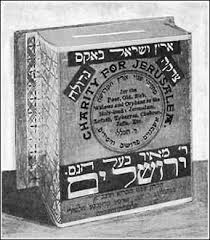
tzedaka

Baltimore is a town where the entire Jewish community is truly generous in its tzedaka and ma’aser giving. But, while it’s easy to write a check or drop a quarter into a pushka, deciding how much and to whom to give one’s tzedaka dollars is complex.

Many of us know the general priorities. Causes like pidyun shevuyim (rescuing a captive) and the needs of the yesomim (orphans), almanos (widows), and the aniyim (poor) of one’s own town take precedence. After that, one should give to worthy local mosdos (institutions) in need, and then to Eretz Yisrael. Building a mikvah is the first priority in a new community. Expressions of hakaras hatov (gratitude) in the form of donations to an out-of-town Bais Yaakov or yeshiva that one attended may also rank high.


Read More:Tzedaka

It’s a Mitzva to Lend Money, But…


friends

We all know that lending fellow Jews money is a great mitzva, and the Jews of Baltimore are indeed generous when approached for a loan. Moreover, it is not only the rich who are fulfilling this mitzva; those of limited means often lend to friends and family as well. Unfortunately, fewer people know of the other aspect of this mitzva: You do not have to lend to someone who does not have a credible way to repay the loan. In fact, such a person is not allowed to borrow the money.

I have recently become aware of the extent of borrowing and lending going on in our community, because many of the lenders have been unable to collect. This sad fact leads me to the purpose of this article and some advice: If someone requests that you lend them money, use extreme caution!


Read More:It’s a Mitzva to Lend Money, But…

Dollars and Good Old Common, Sense Part 2


kesubah

Last month, in part one of this article about the fundamentals of personal finance, I covered the importance of gathering a team of financial advisors, teaching children how to handle money, preparing for a parnassa and marriage, student loans, avoiding credit card debt, the importance of insurance, and what to look for in a job. Here I will cover more topics of interest.

I want to reiterate the basic attitude we Orthodox Jews should have towards money. It is that parnassa is truly a gift from Hashem, for which we daven every day. No matter what our financial position – barely holding on or blessed with largesse – we must always recognize that it is Hashem’s money with which we have been entrusted; our job is to manage it properly. Our job is to be same’ach bechelko, happy with our lot, and do our hishtadlus, our best efforts, to support ourselves and our family.


Read More:Dollars and Good Old Common, Sense Part 2

Dollars and Good Old Common Sense Part 1


dollars

Parnassa is truly a gift from Hashem. Each morning, in Ashrei, we recite, “posai’ach es yaodecha – You open Your hand to satisfy all the living.” In Shemoneh Esrei, we ask Hashem to “satisfy us from Your bounty.” On motza’ei Shabbos, we ask Hashem for dew from Heaven to give us the fatness of the earth and plenty of corn and wine. We ask for parnassa in Avinu Malkeinu, as well as in the blessing on Rosh Chodesh, the new month. In the bentshing, too, we thank Hashem for our bread, while asking for sustenance, blessing, and success.

No matter what our financial position – barely holding on or blessed with largesse – we must always recognize that it is Hashem’s money with which we are entrusted, given to us to manage properly. We must be same’ach bechelko, happy with our lot, and do our hishtadlus, make our best efforts, to support ourselves and our family. That includes crafting a sound financial plan.


Read More:Dollars and Good Old Common Sense Part 1