
CAPTURED IRANIAN WEAPONS SHIP: LESSONS TO LEARN


weapons

(Mr. Phillips is president of the Religious Zionists of America, Philadelphia Chapter; Mr. Korn, the former executive editor of the Philadelphia Jewish Exponent, is chairman of the RZA - Philadelphia /http://www.phillyreligiouszionists.org/)

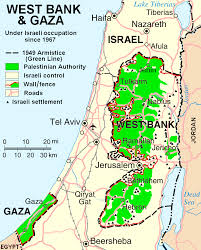
Why are most Israelis reluctant to create a Palestinian state in the Judea-Samaria (West Bank) territories?  The interception on March 6 of the Iranian weapons ship bound for Gaza answers that question more clearly than any scholar's book or politician’s speech ever could.

Hidden underneath sacks of Iranian-made cement on that ship were dozens of M-302 surface-to-surface rockets with ranges of 50 to 100 miles. Note: the distance from Gaza to Tel Aviv is 43 miles.


Read More:CAPTURED IRANIAN WEAPONS SHIP: LESSONS TO LEARN

Raising Kids- He doesn’t like Gemara


gemorah

I have a good son. In fact, he’s a great son; He has good middos. He is kind, nice to everyone, intelligent, and responsible. At 16, he drives everywhere, and is happy to do errands for me. He’s a really special person. I couldn’t ask for anything more.

My son likes everything about school, during the English part of day. He likes his rebbe, too, but he doesn’t like gemara. It’s boring and doesn’t excite him. He okay with Chumash, mishnayos, halacha, and many other subjects. But most of the day, he says, is spent on gemara.

About any other subject, I would say, “Don’t worry, that’s not the only thing that counts.” But I’m afraid that, in our system, it is the only thing that counts. And I’m worried that his lack of success in gemara is making him feel badly about himself. I don’t want it to affect his relationship with his Yiddishkeit – because the reality, it seems, is that to be a successful ben Torah in today’s society, you need to be good at gemara.

When I went to a PTA meeting recently, the rebbe said to me, amidst much praise, “You don’t want your son to be one of those who goes off the derech.” He told me that the boys who don’t like gemara have nothing to hold them to Yiddishkeit. I felt like I was going to faint. What are you talking about? I thought. My son is a gem.


Read More:Raising Kids- He doesn’t like Gemara

Planning Your Vegetable Garden Part 3


winter tree

 This third article will cover the final preliminary step before you are actually ready to plant outdoors and launch your vegetable garden on its journey towards making the best vegetables you have ever tasted! This third step is the most critical one of them all; if it is not done correctly, then anything else you have done or will do is practically for naught. And, this step is the hardest one of them all – here is where we separate the proverbial men from the boys; okay, women from the girls, too! Ummm… no offense, boys and girls.


Read More:Planning Your Vegetable Garden Part 3

Laydig-gayers and Flahgmats (Loafers and Procrastinators)


lazy dog

If you know the meanings of laydig-gayer and flahgmat, you earn 50 Yiddishist points – unless you peeked at the translation. (It’s hard not to, when it’s in the title!)

A laydig-gayer is someone who has either retired or who simply has nothing to do except twiddle his thumbs forward and then backwards. A flahgmat, on the other hand, is someone dedicated to taking his (or her) good old time.

So what does being a laydig-gayer have to do with us Yidden? you may ask. After all, there are nochrim (non-Jews) who perceive us as rich aggressive folks. But the truth is that we do have laydig-gayers and flahgmats among Bnai Yisrael (the Jewish people) – and I can prove it!


Read More:Laydig-gayers and Flahgmats (Loafers and Procrastinators)

Your Income Tax Checklist


taxes

With tax time fast approaching, here is a checklist – along with my comments – of the information and documents you need to collect.

Personal info: The legal names, dates of birth, and social security numbers of everyone in the family.

Status: Married couples have to file as “married.” Single people file as “single” or “head of household,” which is tax talk for single parent. Married people can file separately, but they usually lose more than they gain.

Comment: It might make sense to file separately if you have high medical or work expenses. Planning a wedding date carefully can provide great savings. Also, if a couple is going to separate, the timing can make a difference.


Read More:Your Income Tax Checklist

Simcha for All


children at a wedding

Planning any kind of simcha – be it a wedding, bar mitzvah, bris, Kkddush, sheva brachos, pidyon haben, etc. – comes along with extensive planning, organizing, and prioritizing. Should the tablecloths be blue or silver? Orchids or lilies? A three-piece band or eight? A hall for 50 or 100? 200 or 400? The photographer who gives an album, or the one who just gives the proofs? The grander the simcha, the more intense the headaches for the baalei simcha.

In the past two decades, as simchos have swelled to credit-busting proportions, community leaders and rabbanim have been exerting pressure to keep simcha celebrations to a minimum, without unnecessary grandeur and luxury. So much focus has been placed on prices, decibels, and cutoff hours that we have been unanimously neglecting to focus on the behavior and chinuch (education) of the smallest participants in the simcha: the children.


Read More:Simcha for All

How I Met My Tichel


tichel

Last month I shared with you “how I met my tichel.” Soon I was to discover that there was another Tichel Lady out there. Here’s how I met her!

It was two years since I started my website, Rivka Malka.com, as a way to reach out and connect to Jews whom I wouldn’t otherwise meet. Thanks to the excellent advice of Yisroel Bethea, I started by making tichel-tying videos. At first, I really didn’t want to. I thought, “Most of the people I’m reaching out to don’t cover their hair or are not even married.

Yisroel disagreed: “What will come through is your authenticity. That’s what people want. They know you for your tichels; go show them tichels.” So that’s what I did.


Read More:How I Met My Tichel

Business NOT as Usual


mehudar

As children, we envision ourselves becoming all sorts of things – when we “grow up.” Some kids want to be garbage collectors and ride a noisy, green truck. Others want to be teachers, imagining what fun it would be to boss everyone around. A few children, finding the pediatrician’s stethoscope “necklace” intriguing, dream of being doctors. And some children believe that driving a big rumbling bus is the ultimate in power!

Then we become adults and reality hits. Being a garbage collector, teacher, doctor, or bus driver no longer seems exciting or even practical, and the ways we find ways to support ourselves turn out to be very different from our childhood fantasies. Some of us become accountants, speech therapists, or mechanics, but others find unique ways to use their talents to support their families.

Although traditional Mom-and-Pop stores still exist, today’s small business people are more likely to use “in” words like “entrepreneur” and “niche” business to describe what they do. And technology has so revolutionized the nature of doing business that it is possible to work from anywhere in the world and to reach customers across the globe. Many contemporary businesses would not have been possible even 20 years ago, because the technology simply wasn’t there.


Read More:Business NOT as Usual

What Have You Done for your Heart Lately?


heart

Ad meah ve’esrim – until 120! With this bracha, we wish each other long life. It’s amazing to think that in a lifetime of 120 years, the average heart would beat 4,541,184,000 times and transport about 315,500,000 liters of blood throughout the body.

The heart is amazingly dependable – if we take care of it. Unfortunately, the typical American diet and lifestyle are not always conducive to heart health. Consider these sobering statistics from the Centers for Disease Control and Prevention: Every year in the U.S., about 715,000 Americans have a heart attack and 600,000 people die from heart disease. Heart disease accounts for one in four deaths in the U.S., making it the leading cause of death among men and women.


Read More:What Have You Done for your Heart Lately?

Bound Behind the Bank


robbery

Just before noon on September 1, 1989, I was driving through a seedy sec­tion of downtown Elizabeth, New Jersey, when I spotted a branch of my bank. I parked in the deserted lot behind the building, walked around to the front entrance, and then remembered that I had left my check in my car. I trotted back, unlocked the car door, and leaned inside while fumbling through an assortment of papers and bills that filled my coat pocket. Finally, I found the envelope with my precious monthly stipend – most of which I had already spent, having mailed out a slew of checks the day before to pay some long overdue bills – and laid my coat back over the seat. As I straightened up and turned to close the car door, I let out a gasp.

Reeking of alcohol, three men wearing tattered jeans and filthy T-shirts had formed a tight semicircle around me. The man on my left was clutching the skinny neck of an empty whiskey bottle. Aiming it upward, he looked as if he were about to hammer something – or someone. His dark, glassy eyes revealed a mean, desperate gaze. The scrawny guy on my right looked almost friendly, but a little scared and hungry. The one in the mid­dle, however, was Lerch, straight out of The Addams Family. His large, rectangular head loomed above me.


Read More:Bound Behind the Bank