Double Identity
May 28, 2015
Comment



Last Monday morning at the close of davening, I received a call from my son, in tears, who told me that Rabbi Aharon Lichtenstein had passed away. I told my son about his teacher what his teacher had told me about my father 43 years ago: “Blessed is the Judge of Truth, Baruch Dayan Emet.”
It is one thing to utter that phrase to someone who has lost a loved one. It is something else entirely for someone to utter that phrase to you as you are steeped in grief and shock about the loss of your own father.
And a close rebbe, or Torah teacher, is, says the Torah, like a father. So the circle closes: I had to tell my son about his teacher, who was also his father, what my teacher, who was also my father, told me on that terrible day in 1972 when I learned about the death of my father.

Walking into Goldberg’s Bagels on that first Monday, about 10 weeks ago, I was all nerves. I took a seat at one of the packed tables and, ignoring everyone, stared at my phone until the program started. Walking into the Senator Ben Cardin Junior Leadership Program (SBCJLP) with low expectations proved to be an okay move. Because as soon as I started learning with my mentor and heard the first speaker, I knew I was going to gain much from it.
As indicated in the program description posted on the NCSY website, SBCJLP is “an elite program opened to the Jewish community and public school teens designed to create the next generation of Jewish leaders through individual training and exposure to current world influencers.” As to the “influencers,” they had to be “individuals at the top of their industries and…carefully chosen to illustrate the wide ranging effects one can have on the community while maintaining a proud Jewish identity.”

Our family arrived in Baltimore in the early 1990s, and from the time we settled into our cozy colonial on Cross Country Boulevard, right down the road from Cross Country Elementary School, I regularly heard snippets of neighborhood lore from the “old timers” – like how there used to be a golf course in the vicinity before the homes were built (causing my boys to go on forays in the backyard for errant golf balls, which they sometimes found!), and how our block was built by a plumbing supply company (explaining the floor-to-ceiling tile work in most of the bathrooms) – not to mention passing comments from people who said they had played in our house when they were children, as friends of a classmate who once lived here.
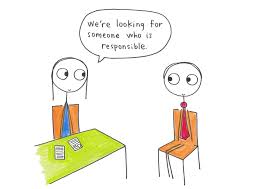
Dear Dr. Weisbord,
My daughter is in her early 20s. She went the normal route of the children of our community, and never had any particular problems. She got good grades, has friends, and generally gets along with others. She finished high school and studied in a seminary after high school. When she returned, she tried to find a job, but nothing came through. Even though there are job opportunities, she always has some excuse for not applying and, if she does apply, does not follow through and has not been successful in finding a job.
I would think that she would be motivated to work, because there are many things I cannot provide for her from my income, but that does not seem to be incentive enough for her to find a job. No job or career preparation that I suggest appeals to her. I think this behavior is very damaging to her confidence and will also be bad for her image when it comes time for shidduchim.

I am a graduate of Bais Yaakov in my third year of shidduchim. Although dates don’t come easily to girls, as we all know, I have had my share. Yet I look around at age 23, still here, and wonder what might be holding me back.
I read a book that has been making the rounds of my friends. It is a secular book about how to “land a husband.” It is all about how to “market” yourself. Its advice on how to act during a date ranges from exactly how to tilt your head to ways of responding to your date’s conversation. I had my doubts about this method, but I wanted to do my best to maximize my chances.

We’ve all heard it a million times, from our mother and bubby to our doctor and government experts: Eat fruits and vegetables. Well, count this nutritionist as one more source for this time-tested good advice.
It’s easier than ever. While the seniors among us remember the limited selection of fresh fruits and veggies in their childhoods, today we are fortunate to enjoy a steady and ample supply of fresh as well as frozen and canned varieties from around the country and the globe. At this time of year, especially, warmer weather and longer, sunnier days make for ideal growing conditions and plentiful supplies. Is it any wonder that June is National Fruit and Vegetable Month?
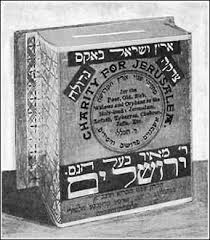
Baltimore is a town where the entire Jewish community is truly generous in its tzedaka and ma’aser giving. But, while it’s easy to write a check or drop a quarter into a pushka, deciding how much and to whom to give one’s tzedaka dollars is complex.
Many of us know the general priorities. Causes like pidyun shevuyim (rescuing a captive) and the needs of the yesomim (orphans), almanos (widows), and the aniyim (poor) of one’s own town take precedence. After that, one should give to worthy local mosdos (institutions) in need, and then to Eretz Yisrael. Building a mikvah is the first priority in a new community. Expressions of hakaras hatov (gratitude) in the form of donations to an out-of-town Bais Yaakov or yeshiva that one attended may also rank high.
Whenever I drive down Greenspring Avenue, past the Sinai ER, on the way to the zoo, I glance to the left to see the old Bais Yaakov high school building, and say to my grandchildren, “Look, that is where I went to school!” The old mansion that housed our high school, built at the time of the Civil War, is still standing, though hard to recognize because the surrounding area has changed so much. The driveway that led to the school is no longer there, and the elementary building has been knocked down to make room for a housing development.
Since my daughter is finishing Bais Yaakov this year, and we are immersed in the rituals of graduation, I started reminiscing about the school I attended more than 40 years ago. Bais Yaakov has been established in the community for so long that some of its graduates have children, grandchildren, and great-grandchildren attending the same school they did. Sometimes they even have the same teachers. I spoke to women who attended Bais Yaakov High School in the ’50s, ’60s, and ’70s to hear about their memories of high school life.

Computer Repair
COMPUTER REPAIR - Servicing the community for 25 years FREE...
Home Health Care
BHC Home Care provides compassionate in-home care for seniors. Assistance...
Stressed?
New: Unprecedented, Comprehensive & Life Changing Course! Dealing With Stress Including 40+...
Burial Plots
Two plots. Side by Side. In the front of Orthodox...
Lost Necklace
Lost a diamond necklace the Shabbos of March 14th 2026...





Copyright © 2012 Where What When. All rights reserved.