
Articles by Devora Schor

Going to Camp this Summer?


 Summer camp is a subject that consumes parents starting in the dead of winter. Should I send my child this year? Or should I wait for next year? Which camp should she go to? Should he go at all? How can I get the camp to accept my child?

My parents sent me to camp at the young age of 9 to try to cure me of my shyness. The camp had very strict rules, and parents were not allowed to visit or speak to their children for the full three weeks. My father often reminded me of the time he happened to be in the area and wanted to visit me but they wouldn’t let him onto the grounds. Instead, the counselor came to talk to him at the gate of the camp. My parents sacrificed to send me to camp, and I am sure they missed me, but they wanted me to have a great summer, and it was a priority to do what they thought was good for me.


Read More:Going to Camp this Summer?

When a Loss Becomes a Gain


chesed

I love these stories about how people went out of their way to do the mitzvah of returning lost things:

Temima got a phone call about a year after she returned from a trip to Gibraltar. “A stranger called me and said he was in Gibraltar and had found a siddur with my name in it. He wanted my address in order to return it to me. It turns out that the siddur was a small one that I had gotten from someone’s bar mitzvah. I told the man that he needn’t bother, but he insisted that he would not give up the opportunity to do the mitzvah. A few weeks later, the small siddur arrived at my house.”


Read More:When a Loss Becomes a Gain

Having a Chavaya!


heart

A number of years ago I attended a family bar mitzvah in Israel. Everyone there was related to the bar mitzvah boy. There were grandparents, cousins, aunts, and uncles. I noticed two strangers sitting at one of the tables and wondered how they were related. It turns out they weren’t. They were seminary girls who had called and asked if they could come for Shabbos lunch, since the family was on the list of Shabbos lunch hostesses.

“Why not,” the hostess thought. “There is plenty of food!” The two girls sat though the whole family simcha. I worried about them, because I thought we should be paying more attention to them so they wouldn’t feel like outsiders. But the girls seemed fine and unperturbed by this peculiar situation.

It seems strange to put two perfectly normal girls from normal families in the position of poor people who have no place to eat and need to ask strangers for a place in the middle of a family simcha. This year my granddaughter is in seminary in Israel, and I was interested in hearing about her experiences going to strangers for Shabbos.


Read More:Having a Chavaya!

You Can’t Fake It


seder

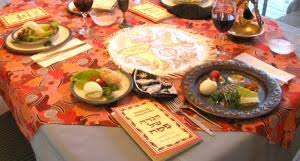
I remember as a little girl taking a nap on erev Pesach in order to be able to stay up for the Seder. It was thrilling to get dressed for Yom Tov and be part of all the excited hustle and bustle. We had a Seder plate that my parents had created together out of wood, with a design composed of colored pebbles. My mother made a special velvet curtain that went around the Seder plate. It was very big and sat proudly in the center of the table. 

We set the table differently than usual. There were no plates or silverware, only the cup to drink the wine and a Haggadah. The food was not the important part of the Seder and only came out close to midnight. I remember my mother hurrying my father up as it got closer to chatzos, because we had to eat the afikoman before then. 


Read More:You Can’t Fake It

The Gift of Receiving


shalom

Have you ever heard of the expression “all dressed up with nowhere to go”? It presents the pathetic picture of a person who is all ready to go somewhere, to accomplish something, but no one wants what he has to offer. That is what it can be like for those who want to live a purposeful life. We want to emulate G-d; we want to be givers. But in order to be givers, someone has to be willing to receive.

In her book, Circle, Arrow Spiral: Exploring Gender in Judaism, Miriam Kosman describes the power of being the receiver in a relationship. “The greatest gift one can give another person is to allow him to experience that godlike feeling of being the bestower. By allowing someone to give, you are, on the deepest level, giving him a chance to express his inner essence….Someone who has no way to give is locked away from his connection to his Divine essence.” Mrs. Kosman elaborates on the connection that is created between the giver and the receiver. She says, “The art of receiving is what opens the door to relationship, to abundance, and to joy.” According to Mrs. Kosman, the giver and the receiver have a reciprocal arrangement, and both are doing kindness to each other.


Read More:The Gift of Receiving

Walking to Sinai


elevator

It was not a cold day, just foggy and rainy, and the streets on the way to Sinai were completely deserted, probably because it was January 1. My friend Batya* was in the hospital. I was pretty sure she had no visitors, and I thought she would appreciate one. So even though I wasn’t sure that the hospital would let me in, because of COVID, I decided to try.

Batya turned out not to be seriously sick, b”H, but by the time I got to her room, I had passed through a veritable halachic jungle. It is amazing how many electronic doors, appliances, and writing tasks there are to do in a hospital, even if you are just visiting! Almost every step I took in Sinai Hospital triggered another question in my mind.


Read More:Walking to Sinai