
Articles by Devora Schor

An Interview with a Baltimore Shadchan


present

“Rivka Blackson” is a shadchan who lives and works in the Baltimore community. She has chosen to remain anonymous so as not to risk hurting the feelings of singles whom she has been unable to help. The insights and ideas she expresses can help us understand the world of a shadchan whose goal is to set up as many happy couples as possible.

Q: How did you get into making shidduchim?

A: When I first got married, more years ago than I care to admit, my Shabbos table was full of single boys and girls. I can say that out loud now because, b”H, all my children are married! The world was a different place, and it was acceptable to have a mixed Shabbos table; in fact, it was the norm, at least in my circles.

At one of these meals, I thought that two of my single friends would be a good match. Even then, it took some doing to convince them to go out. They finally did, and the rest is history. Once I made that shidduch, I got the “bug” and wanted to help all my friends get married. I was young, idealistic, and proud to be thought of as “Yenta” from Fiddler on the Roof! People, again, in my circles weren’t paid for making a shidduch. I never thought of it as a profession or even dreamed that real people did this as a profession. It was a great feeling to help people and an honest thrill when they got engaged. Families would give (sometimes) a small gift as a thank you, like a candy dish or flowers. I would say that things have changed slowly and then drastically over the last 25 years.

Today, I am a shadchan simply because there is such a tremendous need, and I can’t let myself stop, even though I want to most days. I sometimes say that G-d is playing a game with me. Every time I say, “Okay, this is it, I am retiring from all this,” a shidduch comes through, and I know Hashem is telling me that, even though it is a hard and often thankless job, I must do my best to try and help.


Read More:An Interview with a Baltimore Shadchan

Understanding Trauma and PTSD in Laymen’s Terms


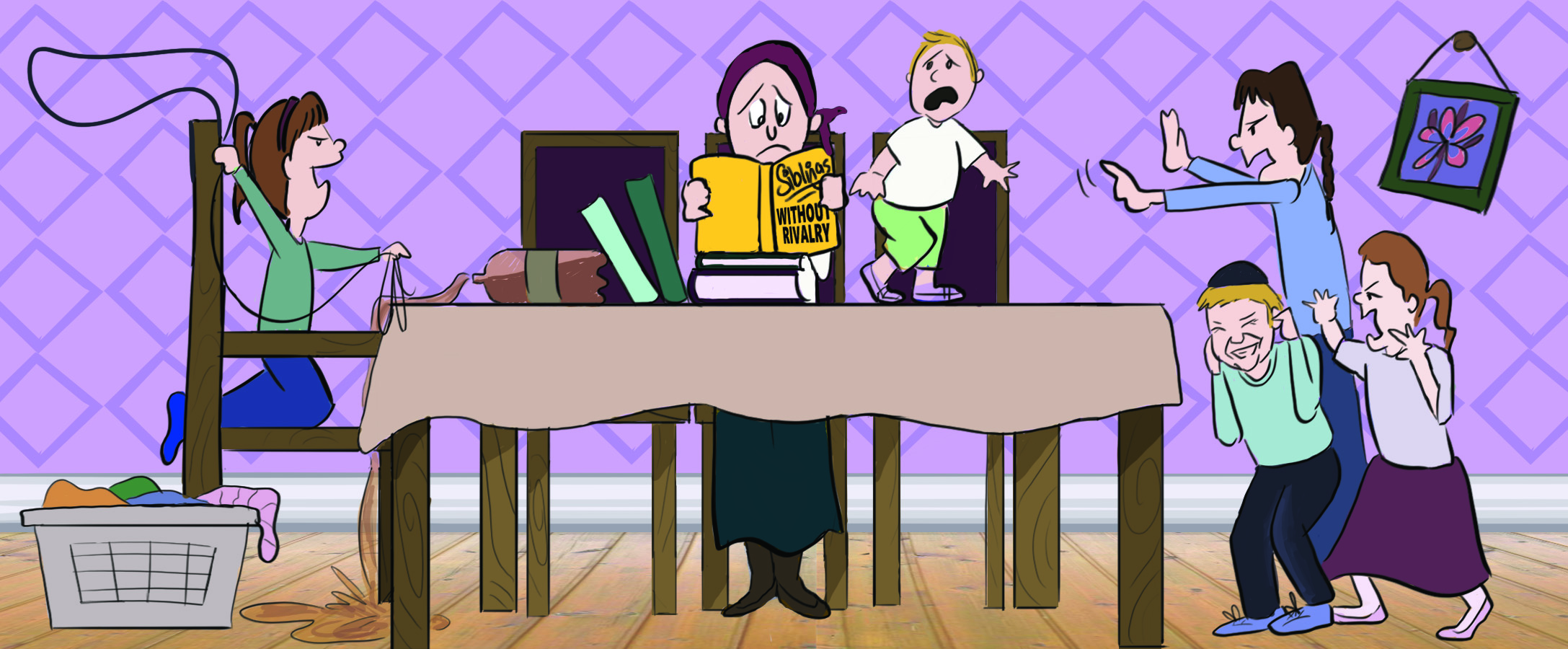
sibling rivalry

Often we hear words or terms used and we have a vague idea of what they mean, but we don’t really have a full understanding of what they encompass. For this article I decided to uncover the meaning of the terms trauma and Post Traumatic Stress Disorder, also known as PTSD. While I knew that they refer to mental health problems that affect people in different ways, I had very little understanding of how they applied to everyday life. I am lucky enough to have a son, Shlomo Schor, who is a psychotherapist specializing in treating people who suffer from traumatic experiences that lead to PTSD. He took the time to explain to me what trauma is, how it leads to PTSD, and how it can be treated.


Read More:Understanding Trauma and PTSD in Laymen’s Terms

When Your Child Doesn’t Fit


classroom

A few months ago, I wrote an article about how families are coping with the burden of tuition for their children’s Torah education. Next, I wrote about dealing with phone calls from school about misbehaving children. In this third in the series on school-related topics, I will explore the perspective of parents who are part of the Orthodox Jewish community but are educating their children in schools outside the community.

In a sense, this phenomenon is a sign of the success of the Jewish day school movement. In previous generations it was very common for children to attend public schools or non-Jewish private schools. My mother, who grew up in a small town outside London, attended non-Jewish schools, beginning with elementary school and going all the way through teachers training college. In fact, she and her brother were the only Jewish students among hundreds of non-Jews. She grew up in a very religious home and was taught to read Hebrew by her grandmother but had very little Jewish book learning. She always felt a little ashamed when she could not help us with our Chumash homework. My father told me that in his non-Jewish school, also in England, the Jewish students were excused from singing Christmas carols and instead were allowed to decorate the Christmas tree!


Read More:When Your Child Doesn’t Fit

Do You Need an Interior Designer?


interior design

On a recent visit to my son and daughter-in-law, I noticed that their walls were painted different colors. Rooms that were near each other were painted different shades of the same color, blending together seamlessly.

“How did you decide what colors to paint your walls?” I asked in astonishment. Most of the walls in my house are either white or off-white, or the color the painter had in stock.

They let me in on their secret. They had hired an interior designer, who had suggested which colors to paint the different rooms to make the rooms look warm, cozy, and unique.

This conversation


Read More:Do You Need an Interior Designer?

Dreidel and Beyond: A Bubby’s Guide to Chanuka Games


present

My career as a game planner for Chanuka parties began when I was a child living at home with my parents and siblings. Every year, I planned a treasuMy re hunt for each member of the family. When I was in Gateshead Seminary, far away from home, I chose presents for each of my siblings (small things like chocolate bars) and then wrote four or five clues for each present. The whole box was sent before Chanuka with instructions to my sister closest in age to me to hide the clues and the presents.

Forty-five years later, in my role as Bubby, I am still planning Chanuka parties. I’m lucky that a number of my married children live in Baltimore, which makes it easier to get everyone together. I like to imagine that my children and grandchildren look forward to seeing all their aunts, uncles, and cousins once a year at a party. What is the definition of a party? I guess each family has its own definition. But, most likely, every Chanuka party includes food and games. Sometimes, I have the nachas of hearing one of the grandchildren ask if we are going to do such and such a game again this year. If they ask that question, then, of course, answer is going to be yes. If you, my grandchild, enjoyed the game and remembered it, then why not?


Read More:Dreidel and Beyond: A Bubby’s Guide to Chanuka Games

Parents, Principals, and Kids


reading

Although it’s been many years since I had young children in school and had to face the dreaded phone calls from teachers and rebbeim about misbehavior, I haven’t forgotten them. I remember how helpless and hopeless I felt when I got negative feedback from my children’s teachers and principals. What do I do? What should I say? How much control do I have over my children, anyway, especially when they are not with me? Why is everyone else’s child behaving and not mine? Are all the children “A” students except mine?

As long as there are schools and children, principals and parents, the dilemma of the “phone call from school” will be with us. I thought it would be interesting to speak to some school administrators to find out how they would like parents to react to those inevitable phone calls and to parents on how they want to be approached.


Read More:Parents, Principals, and Kids