
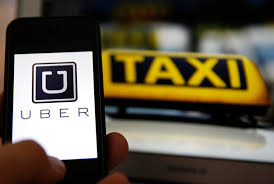
Popular ride-hailing companies Uber and Lyft will plead their case Thursday before the Maryland Public Service Commission that they should not be required to fingerprint drivers.
Fingerprinting is a standard part of the background check process for taxicab drivers and many other professionals licensed by the state. But Uber and Lyft argue fingerprint-based background checks are less accurate than their own private systems and discriminate against minorities who are more likely to be in the criminal record system following an arrest, even if never convicted.
Under a state law passed in 2015, the companies are required to begin background checking drivers Dec. 15 using the fingerprint database maintained by the state and the FBI, unless they prove their approach is equally effective. Both companies filed separate petitions with the state Public Service Commission, which regulates ridesharing companies, for permission to continue doing background checks their way.
Uber has said it will pull out of Maryland if fingerprinting is enforced. Lyft has not said it would withdraw, but pointed out that it does not operate in any market where fingerprinting is required except New York City.
The debate comes against a backdrop of headline-grabbing incidents involving ride-share drivers — including here in Maryland — and growing concern about rider safety. In October, an Uber driver in Frederick was charged with sexually assaulting a 14-year-old girl he picked up. An Uber driver in Gaithersburg was arrested in May after he tried to shoot police officers with a homemade gun.
Critics point to these incidents and others around the country as evidence that private background checks aren't good enough.
"We're seeing a lot of people hurt by so-called part-time drivers," said Dave Sutton, a spokesman for Who's Driving You?, an organization working on behalf of the Taxicab, Limousine & Paratransit Association to push for greater regulation of ride-hailing companies.
During the Public Service Commission hearing, scheduled to run into next week, Uber and Lyft plan to call a long list of criminal justice experts to make the case that fingerprinting is unnecessarily onerous for people seeking part-time work and could unfairly block some from employment while doing little to improve safety for customers.